
Greer Heard Preview Pt. 2: Simon Gathercole

By Staff
In the weeks leading up to Greer Heard, we are posting Q&A’s we did with the speakers of this year’s Greer Heard forum. Our second piece is with Simon Gathercole. We want to provide these Q&A’s so that youare able to access the information presented at Greer Heard easier, as well as giving you a chance to see a pieceof the person behind the ideas.
Steve Morgan: Simon, from where do you hail?
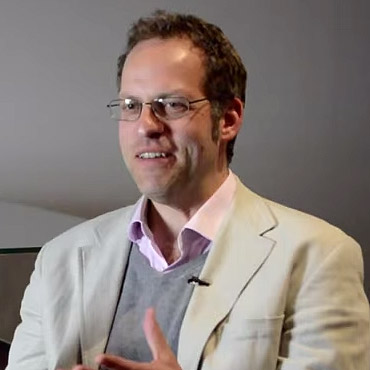 Simon Gathercole: I grew up just outside London in the UK, but I now live in a small village outside Cambridgecalled Grantchester. Despite the fact that it only has about 500 inhabitants, it has a number of claims to fame. Rupert Brooke used to live there and wrote the famous poem,The Old Vicarage, Grantchester.It’s said to have the highest concentration of Nobel Prize Winners per head of population. And it’s now also the murder capital of England, since the series of books and TVprogrammesstarring the sleuth vicar Canon Sidney Chambers.
Steve: Give me a brief rundown about your past.
Simon: I went to King’s College, Cambridge as an undergraduate and studied Classics then Theology. I then did my doctorate at Durham University on Paul and the Judaism of his time. During this time I spent the summers in Tübingen, Germany. My first job was at the University of Aberdeen in Scotland, and I moved to Cambridge in 2007. I have a wife and two children (Martha, 11 and Freddie, 9).
Steve: Who are the authors that have influenced you the most?
Simon: Among the most influential are George Orwell, Anthony Trollope, P.G. Wodehouse and Dorothy L. Sayers. Unless later evidence turns up to contradict this claim, Wodehouse’sLeave it to Psmithit quite simply the finest novel in the English language. Orwell’s1984is a masterful summary of power relations, and his essays on the English language are also first rate.It’s acliché, but I love Tolkien andC.S. Lewis (though I confess I haven’t read the Narnia chronicles). I’m currently reading and greatly enjoying Marilynne Robinson.
Steve: What are you going to assert at Greer Heard this year?
Simon: It’s often said that the early Christian ideas about Jesus’ divinity arose in a culture in which human figures could be deifiedwithout too much trouble, especially after their deaths. This is what happened with a figure like Augustus, the Roman emperor at the time of Jesus’ birth. Some scholars push this to include the Jewish environment as well: the claim goes that Judaism was not necessarily as strictly monotheistic as has traditionally been thought, and even the term “monotheism” is a bit problematic. My lecture will set out the idea that although there was a variety of views about God in the Herodian period in which Jesus was born and died, the Jewish theological climate in which Jesus and his first disciples moved actually was strict in its monotheistic views.
Steve: How will Michael Bird respond to your position?
Simon: I’m not sure. Mike and I are often on similar sides of debates when it comes to Christology, though we differ on individual points of detail. But because of Michael’s outrageous Australian accent, I’m not even sure that when he’s done, we’ll know what he’s said.
[Editor’s note: Simon should have been askedhowBart Ehrman would respond rather than Michael Bird. Instead of eliminating the comment, the GK editors chose to includeSimon’s brilliantresponse to this incorrect question.]
Steve: How will Bart Ehrman respond to your position?
Simon: Bart will politely point out the error of my ways!
Steve: What is one thing that people in the States lack that people in the UK have?
Simon: Where do I begin? In the words of Cecil Rhodes, being English means having“won first prize in the lottery of life”. In 1776 this prize was tragically forfeited by people in the United States. But seriously, the British weather.